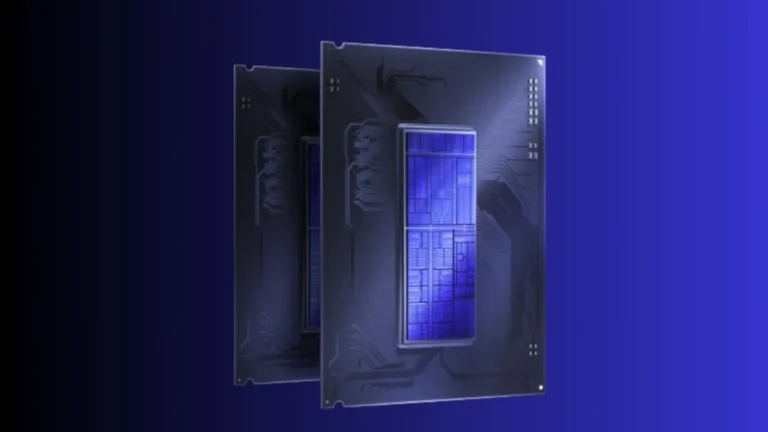
Intel has launched the Core Ultra 200S Plus series of desktop processors, marking a refreshed take on its Arrow Lake architecture (Core Ultra Series 2). Announced on March 11, 2026, the lineup introduces the Core Ultra 7 270K Plus and Core Ultra 5 250K Plus, targeting gamers and content creators with architectural tweaks, more efficiency cores, faster memory support, and a new software tool for performance gains.
These “Plus” variants build directly on the existing Core Ultra 200S lineup, such as the Core Ultra 7 265K and Core Ultra 5 245K models. Key enhancements include additional efficiency (E) cores for better multi-threaded throughput, a boosted die-to-die interconnect frequency (up by up to 900 MHz for reduced latency), and official support for higher-speed DDR5 memory.
Higher Core Counts and Memory Upgrades
The flagship Core Ultra 7 270K Plus packs 24 cores (8 performance cores + 16 efficiency cores) and 24 threads, up from the 20 cores (8P + 12E) in the standard 265K. It reaches turbo boosts up to 5.5 GHz on P-cores, with improved base clocks and a larger cache configuration (36MB Smart Cache + expanded L2). This setup excels in multi-threaded tasks like video editing, 3D rendering, and heavy productivity workloads.
The Core Ultra 5 250K Plus offers 18 cores (6 performance + 12 efficiency) and 18 threads, compared to the 14-core (6P + 8E) 245K predecessor. Both chips maintain a 125W base TDP (up to 250W turbo power), ensuring they fit well in existing cooling solutions.
Memory support sees a significant leap: these processors natively handle DDR5-7200 MT/s, versus the DDR5-6400 limit on non-Plus models. Intel also enables the Core Ultra 200S Boost BIOS profile on compatible motherboards, allowing overclocking up to 8,000 MT/s with full warranty coverage. Early support for 4-rank CUDIMM memory (up to 128GB per module) is coming via new 800-series chipset motherboards throughout 2026, promising massive capacity for creators and professionals.
Intel Binary Optimization Tool: A Software Boost
A standout addition is the Intel Binary Optimization Tool, a binary translation optimization system that enhances instruction efficiency across workloads. It improves performance even for apps originally compiled for other x86 processors or different architectures. Integrated with features like Intel Application Optimization (APO), it delivers more consistent gains in games and applications compared to prior tools. Intel positions this as a key enabler for its claim of up to 15% average higher gaming performance over existing Core Ultra 200S CPUs.
In multi-threaded scenarios, Intel touts up to 103% better performance versus competing processors in similar price segments (though real-world results vary by workload, configuration, and testing). The company calls the Core Ultra 7 270K Plus its “fastest desktop gaming processor ever,” emphasizing value for PC builders.
Compatibility, Pricing, and Availability
The new chips retain full compatibility with existing Intel 800-series chipset motherboards (LGA 1851 socket), so users upgrading from earlier Arrow Lake CPUs won’t need a new board. However, fresh motherboard models launching in 2026 will unlock extras like advanced memory support and optimized features.
Availability kicks off on March 26, 2026, through retail partners and system integrators worldwide. Suggested pricing is aggressive: the Core Ultra 7 270K Plus starts at $299 (approximately ₹27,500 in India, depending on regional taxes and retailers), while the Core Ultra 5 250K Plus begins at $199 (around ₹18,300). These prices undercut the launch MSRPs of their non-Plus counterparts (e.g., the 265K was $394), making them compelling against AMD’s Ryzen 9000-series rivals like the Ryzen 7 9700X and Ryzen 5 9600X.
KF variants (without integrated graphics) are also expected in the stack for users pairing with discrete GPUs.
With these updates, Intel aims to strengthen its desktop foothold amid competition from AMD’s gaming-focused X3D chips. The Plus series combines hardware refinements and smart software tweaks to deliver better value, especially for mixed gaming and creation workloads. Enthusiasts should watch independent reviews post-launch for real-world benchmarks confirming Intel’s claims.