
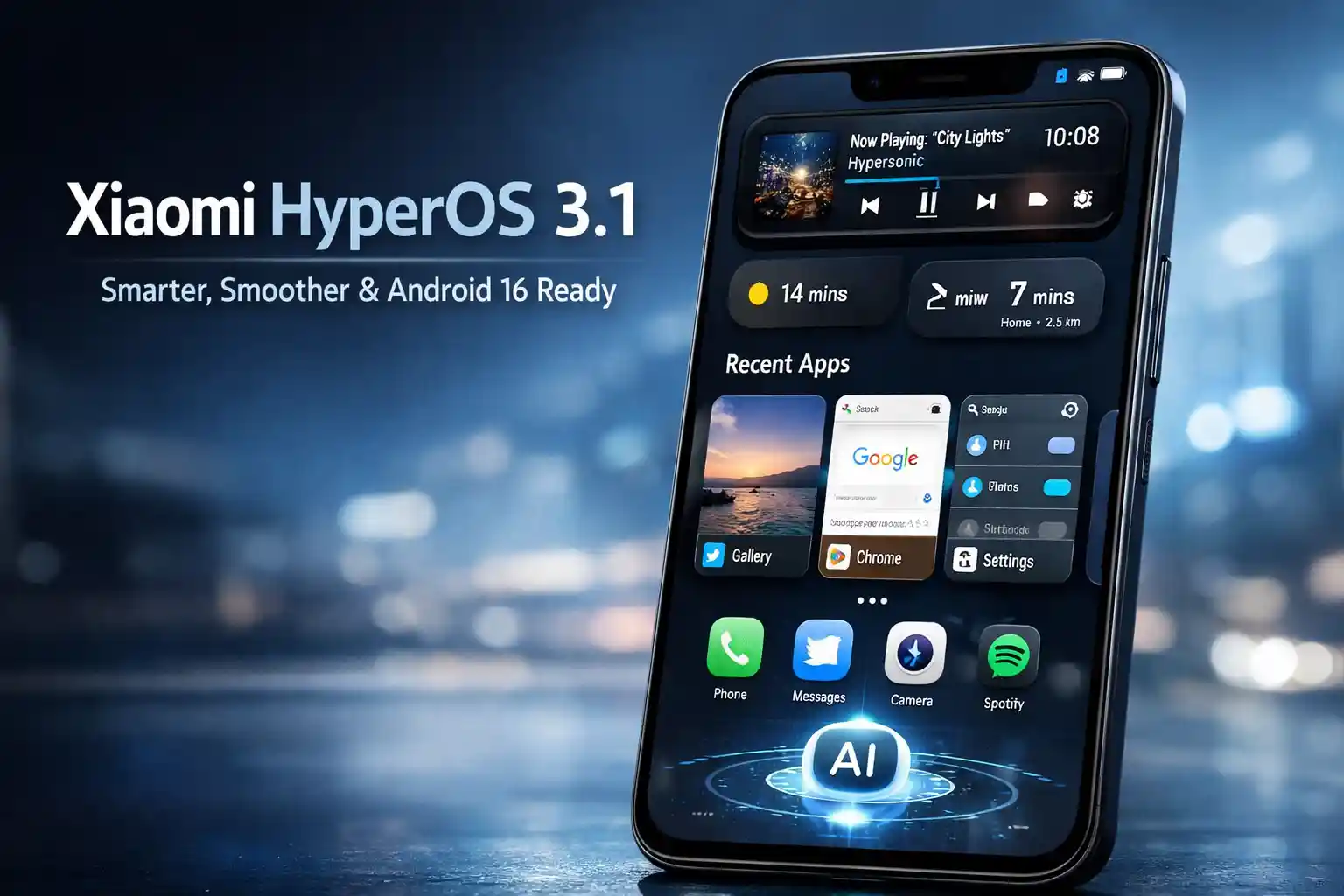
Recent reports from XiaomiTime confirm that HyperOS 3.1 is shaping up to be a significant iterative update, bringing smarter system interactions, visual improvements, and quality-of-life features — but only on devices running Android 16 or later.
Smarter HyperIsland and Refreshed UI Experience
Smarter HyperIsland Hub
One of the biggest features in HyperOS 3.1 is an enhanced HyperIsland — Xiaomi’s version of a dynamic information hub similar to Dynamic Island on other platforms. The update makes it more intelligent, providing real-time information like media controls, timers, and live activity cards without opening apps.
Updated Recent Apps Menu
HyperOS 3.1 replaces the traditional two-column recent apps layout with a “Stacked” horizontal scroll style that gives smoother and faster app switching, making multitasking feel more intuitive.
Visual Polish and System Animations
There are refined animations across the UI, delivering cleaner transitions and a more modern visual feel, along with smoother scrolling and responsive effects that enhance everyday usage.
New Customization and Lock Screen Features
Better Folders & Desktop Customization
The home screen now allows drag-and-drop resizing of folders (e.g., 2×1 and 1×2) giving users more control over how apps are organized, something that enhances personalization compared to earlier HyperOS builds.
Lock Screen Tweaks
While the core lock screen features from HyperOS 3.0 continue, 3.1 brings better stability and minor refinements such as more consistent behavior under heavy notification loads, making quick access feel smoother.
Under-the-Hood Enhancements: Performance and AI
AI-Assisted System Behavior
HyperOS 3.1 leans on AI improvements that help with task scheduling, background app memory management, and subtle performance enhancements that make the OS feel more intelligent and adaptive over time.
Battery and Stability Improvements
Optimizations tied to Android 16 help reduce background power drain and make daily performance slightly smoother, especially for flagship devices and power users.
AI Features and Personalization
Other sources suggest the update may include AI-enhanced tools like smarter suggestions, improved payment flows, and a Dynamic Theme engine that adapts colors across the system based on wallpapers.
Android 16 Requirement and Device Rollout
Exclusive to Android 16 Devices
Unlike HyperOS 3.0, the 3.1 version is tied to Android 16 builds only, meaning that any Xiaomi, Redmi, or POCO device still running Android 15 will not receive the full HyperOS 3.1 upgrade.
Rollout Plan & Early Availability
Early waves of HyperOS 3.1 beta updates began in late January 2026 with flagship devices (e.g., Xiaomi 17 series, Redmi K90 line, and newer tablets), with broader rollouts expected through early spring.
What Users Can Expect in Daily Use
To many users, this won’t feel like a revolutionary rewrite of the OS but rather a refinement of HyperOS 3.0 with meaningful day-to-day improvements. Things like smoother navigation among apps, more reliable live info from notifications, and a visually lighter interface are the kinds of upgrades people will notice during daily interactions rather than in spec sheets.
Summary: Key HyperOS 3.1 New Features
- Smarter HyperIsland with interactive live info and customizable effects.
- Stacked recent apps UI for smoother multitasking.
- Enhanced desktop customization and folder resizing.
- Under-the-hood performance and AI optimizations.
- Tied exclusively to Android 16 eligible devices.
Overall, HyperOS 3.1 doesn’t overhaul the entire system but delivers smart incremental changes that aim to make Xiaomi devices feel faster, smarter, and visually more refined in daily use.